The Real Question Isn’t Whether You Need a Trademark. It’s Whether You Can Risk Not Having One
Do I need to trademark my company name? This guide explores the strategic risks of not protecting your brand and why it's crucial for future growth.
Founders often ask, “Do I need to trademark my company name?” It’s a logical question, but it’s the wrong one. Framed as a legal checkbox, it misses the strategic core of the issue. The real question the one that cuts to the heart of brand value and long-term risk is this:
“What happens if someone else gets there first?”
This reframes the entire conversation. Trademarking is not a bureaucratic formality you handle “later.” It’s a strategic move to protect the future value you’re working tirelessly to build. It’s about asset protection, not legal compliance. The thesis is simple: trademarking is the act of securing long-term brand equity before you’ve even fully built it.
Before falling in love with a name, you need to know if it's defensible. Chat Nameworm uses AI to evaluate phonetics, semantic direction, and early trademark risk, giving you the confidence to invest in a name that can go the distance.
Trademark = Protection of Future Brand Equity
Your company name begins as just a word. But from the moment the first customer remembers it, searches for it, or recommends it to a friend, it starts accumulating value. It becomes a container for your reputation, your quality, and your promise to the market. This is brand equity, and it’s one of the most valuable assets you will ever create.
Not trademarking that name is equivalent to building a valuable asset you don’t legally own. You’re pouring time, money, and creative energy into developing prime real estate—in the minds of your customers and on the digital landscape—without holding the deed. You are effectively generating “free real estate” for competitors to claim at any time.
If you don’t protect your brand’s meaning today, someone else can legally take it tomorrow.
This isn’t hyperbole; it’s the fundamental reality of intellectual property in a competitive market. An unprotected name is a vulnerability waiting to be exploited, allowing another company to legally seize the narrative and market position you worked so hard to establish.
What You Risk by Not Trademarking Early
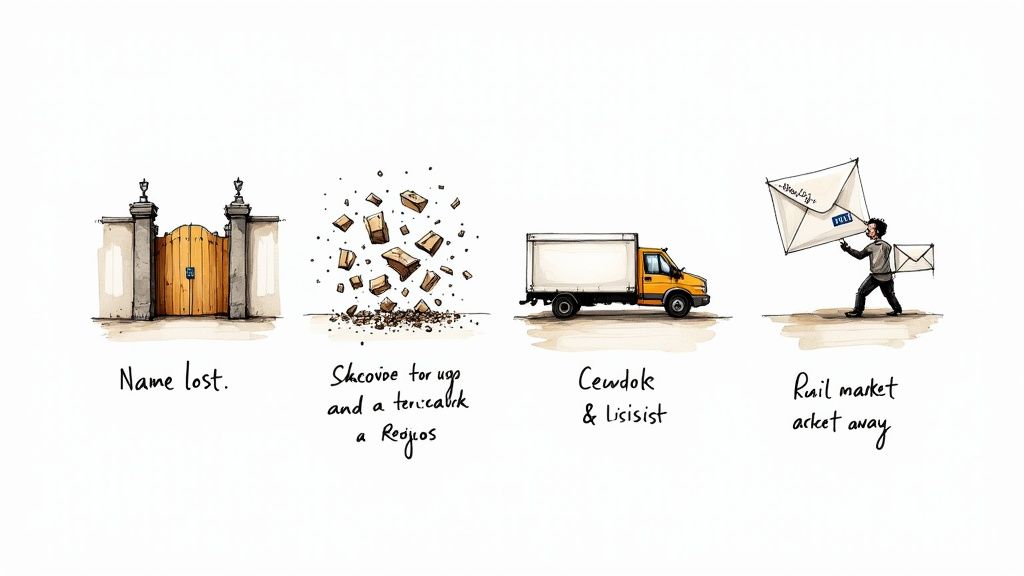
Delaying trademark registration is not a neutral act; it is an active gamble against your own future success. The consequences of losing that gamble are severe and tend to manifest at the worst possible moment just as your brand is gaining momentum. The risks are not merely legal headaches; they are strategic, operational, and financial crises.
Trademarking isn’t defensive it’s preventative.
Here are the primary consequences of failing to secure your name early:
a) Loss of the name after you’ve built equity
This is the ultimate nightmare scenario. You spend years and significant capital building brand recognition, only to discover a competitor has federally registered your name or a confusingly similar one in your category. Because they secured the rights first, you may be legally blocked from using your own brand. The equity you built is now either theirs or evaporates completely.
b) Forced rebrand during growth
Imagine receiving a cease-and-desist letter right when your company hits an inflection point. A forced rebrand is a chaotic and expensive ordeal that derails momentum. The costs are staggering: a new domain (and resetting all SEO), new packaging and marketing collateral, lost social media handles and followers, and the difficult task of re-educating confused customers and investors. It’s a self-inflicted wound at the moment of maximum opportunity.
c) Litigation or cease-and-desist letters
Beyond the cost, a legal challenge forces an immediate operational halt. You may have to stop using the name instantly, pulling advertising, pausing campaigns, and ceasing all sales under that brand while you navigate the legal battle. This abrupt stop can be fatal for an early-stage company that relies on momentum.
d) Category encroachment
When a competitor trademarks your name, they don’t just take a word; they seize the narrative you created. They can legally dominate the category you defined, leveraging the brand recognition you generated to fuel their growth. You did the hard work of educating the market, and now they own the mental shortcut in the customer’s mind.
Real-World Cases: Brands That Lost Their Names
These risks are not theoretical. Major global brands have stumbled, facing immense costs and strategic setbacks because of trademark conflicts that could have been avoided with early, diligent protection. These cases serve as stark, verifiable warnings.
Burger King (Australia)
When the global fast-food giant expanded to Australia, it discovered that the name "Burger King" was already trademarked by a small takeaway restaurant in Adelaide. The prior local registration was legally superior, forcing the multinational corporation to rebrand its entire Australian operation. To this day, Burger King operates as "Hungry Jack's" across the continent, a permanent reminder that even corporate might cannot overcome prior trademark rights (ABC News, 2016).
Scrabble (India)
For decades, Mattel owned one of the most recognizable game brands in the world. However, in India, the company lost its exclusive trademark to the name "Scrabble." An Indian court ruled that the term had become generic in the region and that other manufacturers had established a history of use, thereby diluting Mattel's claim to exclusivity (Times of India, 2014). This decision legally opened the door for competitors to use the very name Mattel had invested millions in popularizing.
Puffs tissues (Germany)
Sometimes the conflict is not with a competitor but with culture itself. Procter & Gamble's "Puffs" tissues, a household name in the U.S., was unusable in Germany. The name is phonetically identical to the German slang for a brothel (Wall Street Journal, 2008). This cultural oversight forced P&G to abandon its global brand and launch under the name "Tempo" instead, illustrating that trademark viability extends beyond legal databases into linguistic and cultural diligence.
Why Founders Delay Trademarking (and Why It Backfires)
Despite the clear risks, many founders postpone trademarking. Their reasoning often falls into a few common psychological traps, each based on a flawed strategic assumption.
“We’re too small to matter.” The belief that your company is flying under the radar is a dangerous misconception. Trademark trolls and vigilant competitors are constantly scanning for unprotected names, especially in emerging categories.
“We’ll trademark when we grow.” This logic is backward. You don’t trademark after you’ve built value; you trademark to protect the value as you build it. Waiting until you’re successful means you’re trying to insure a house after it’s already on fire.
“We might change the name later.” While pivots happen, this mindset encourages a lack of commitment to your brand identity. A strong name is a strategic asset worth protecting from day one. If the name is truly a placeholder, then it shouldn't be used in any significant marketing efforts.
“It seems expensive.” The cost of filing a trademark (typically a few thousand dollars including legal counsel) is trivial compared to the cost of a forced rebrand, litigation, or the complete loss of your brand equity, which can easily run into the six or seven figures.
The strategic flaw in all these arguments is the failure to recognize when trademark conflicts arise. They don't happen at zero revenue. They happen at the first sign of traction.
The moment your name starts working is the moment it becomes vulnerable.
The Strategic Sweet Spot: When You Actually Should File
So, when is the right time? There is a clear strategic trigger point. You should file for a trademark as soon as two conditions are met:
The name is final and you are strategically committed to it.
You are preparing to invest significant capital or effort into public-facing assets (e.g., website launch, packaging, major marketing campaign).
This timing ensures you secure legal ownership just before you begin creating tangible brand equity in the marketplace.
It's crucial to understand the difference between the two types of trademark rights. Simply using a name in commerce gives you limited common-law rights, often denoted with a ™ symbol. These rights are weak, geographically restricted, and difficult to enforce. For digital-first brands with a national or global audience, they are woefully inadequate.
A federally registered trademark, denoted by the ® symbol, grants you a legal monopoly on the name within your specified category across the entire country. It is a powerful, enforceable asset that provides the robust protection a growing business requires. For modern companies, use-based protection is not enough. Registration is the only path to true brand security.
The Hidden Reality: Many Names Can’t Be Trademarked Anyway
Before a founder even considers filing, a more fundamental question must be answered: is the name even protectable? A startling number of names chosen in brainstorming sessions are legally indefensible from the start. Filing for a weak name is a waste of time and money.
A name must be evaluated against a rigorous set of criteria to determine its legal viability. Is it:
Too descriptive? Names like “Fresh Juice Delivery” describe a service rather than branding it, making them ineligible for broad protection.
Too generic? You cannot trademark the word "Apple" for selling apples.
Too close to a competitor? The standard is "likelihood of confusion." This includes names that are phonetically similar (Kwik vs. Quick), visually confusable, or create a similar overall commercial impression.
Too weak semantically? Does the name have negative connotations or unintended meanings in other languages or cultures?
Half of naming is legal viability. The other half is linguistic clarity.
Failing to screen for these issues before committing to a name is a recipe for disaster. It leads to wasted marketing spend on an asset you can never truly own.
Validate First. Trademark Second
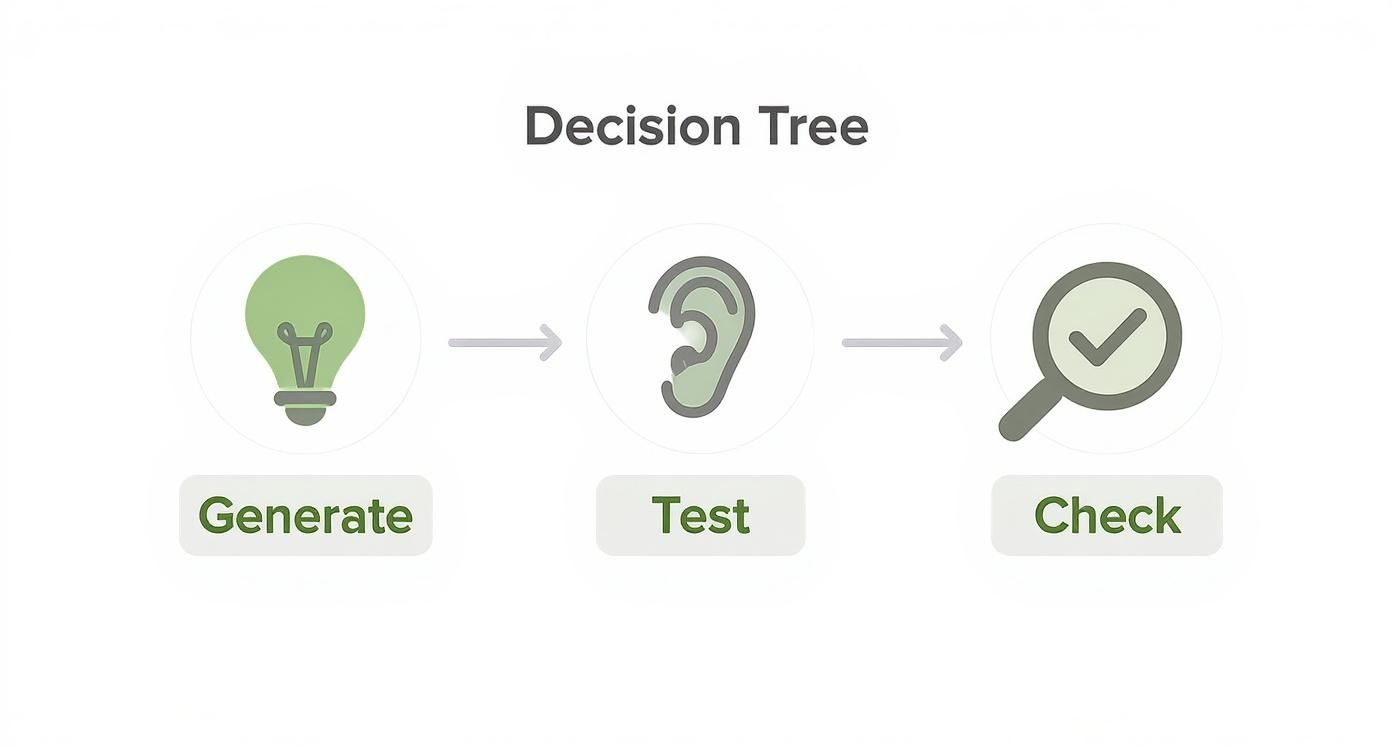
The only way to avoid this trap is to adopt a disciplined workflow that prioritizes validation before legal filing. This de-risks the entire process.
Generate broad name directions. Start with strategy, not just creativity. Develop name concepts tied to your positioning, audience, and brand personality.
Test phonetics, semantics, and vibe. Say the names aloud. Are they easy to spell and remember? Do they carry the right emotional weight?
Narrow the list. Eliminate names that are weak, confusing, or strategically misaligned.
Run a preliminary conflict analysis. Use public databases (like the USPTO's TESS search) and general web searches to screen for obvious conflicts before investing in legal counsel.
Only then → talk to trademark counsel. With a vetted shortlist of strong candidates, you can engage a lawyer for a formal search and filing, saving significant time and money.
Before falling in love with a name, run it through Chat Nameworm. It evaluates phonetics, semantic direction, competitive similarity, and early trademark risk—so you know which names are defensible before investing in them.
Trademark filing protects your future. Validation protects you from filing for the wrong name.
Conclusion. What You’re Really Protecting
Ultimately, trademarking is not about protecting a word. It’s about protecting the entire ecosystem of value that word represents. You are building a legal fence around your most critical intangible assets.
You’re not protecting a name; you’re protecting:
Future brand meaning and the narrative you own in the market.
Customer memory and the mental shortcut they use to choose you.
Search equity and the digital territory you’ve claimed.
The very idea your business stands for.
The final insight is the most important one to internalize. It flips the entire premise of the original question on its head.
You don’t trademark because you’re big. You trademark so you can become big.
Key takeaways
Reframe the Question: Don't ask "Do I need a trademark?" Ask "What do I risk if I don't?" This shifts the focus from compliance to strategic asset protection.
Trademark Protects Future Value: Your name is an asset that accrues value over time. Not owning it legally means you're building equity on rented land.
Delay is a Gamble: Waiting to trademark exposes you to forced rebrands, loss of your name, and expensive litigation at the moment you can least afford it.
Validate Before You File: Many names are unprotectable. A rigorous screening process for linguistic and legal viability must happen before you engage a lawyer.
Protection Enables Growth: Trademarking isn't a task for large companies. It's a foundational step that gives early-stage companies the security they need to grow without existential risk.
Next steps checklist
Audit Your Current Name: Is it descriptive or truly distinct? Perform a quick preliminary search on the USPTO TESS database to spot obvious conflicts.
Define Your Filing Trigger: When will you make a significant investment in marketing or branding? Mark that as your deadline to file.
Create a Vetted Shortlist: If you're still choosing a name, use the "Validate First" framework to create a list of 2-3 legally strong candidates.
Budget for Legal Counsel: Earmark funds (typically $350-$3,000) for a professional trademark search and application.
Consult an IP Attorney: Once you have your vetted name and are approaching your trigger point, engage a lawyer to begin the official filing process.
Before you fall in love with a name, you need to know if it's defensible. Chat Nameworm uses AI to evaluate phonetics, semantic direction, and early trademark risk, giving you the confidence to invest in a name that can go the distance.