A Café Name Is a Tiny World, Not a Label
Tired of generic results? Learn to use a name generator for cafe concepts that creates memorable brands by focusing on linguistic archetypes, not just keywords.
A great café name is not about coffee. It’s about the world the café invites you into. Most tools get this wrong. A typical name generator for cafe brands fixates on the literal—Bean, Brew, Roast, Cup—and churns out soulless, generic variations like "BeanBliss" or "BrewHub." These are not identities; they are labels. They describe what you sell but fail to capture the feeling you want to create.
You’re not naming the drink. You’re naming the feeling.
The strongest café names tap into something deeper. They follow unspoken linguistic archetypes—deep semantic patterns that trigger specific emotional and sensory reactions. They align with the morning ritual, the quiet corner, the moment of calm. This distinction is critical in today's crowded market, where differentiation is paramount.
With the global café market trends showing significant growth, a distinctive name is not a luxury; it's a strategic necessity. A name rooted in a strong archetype provides a foundation for your entire brand narrative from interior design to menu storytelling. Before you finalize a name, run your shortlist through a tool like Nameworm to ensure it's not just beautiful but also strategically sound and legally defensible.
Why Linguistic Archetypes Matter The Semantics of Atmosphere
Café names work by triggering what linguists call semantic fields: clusters of associations around concepts like warmth, slowness, nature, or soft light. These fields cluster naturally into archetypes. An archetype is a shared linguistic pattern that carries a specific mood, texture, and cultural meaning across seemingly unrelated words.
Think of them as emotional shortcuts. The brain recognizes a feeling before it understands the word. That's why a name like Ember feels warm and a name like Hush feels quiet, long before you picture a physical café. When you use a name generator for cafe concepts that understands this principle, it moves beyond keywords to generate entire brand identities.
In the following sections, we’ll deconstruct the four linguistic archetypes of great café names: Poetic, Spatial, Botanical, and Atmospheric.
Archetype #1. Poetic Café Names
Poetic names are soft, lyrical, and aesthetic. They create a sense of slow-living by turning the coffee experience into a ritual rather than a transaction. Their magic is in their sound and semantic openness. They feature long vowels and soft consonants, creating a gentle, airy rhythm. They don't describe; they evoke, signaling a space where every detail is curated and intentional.
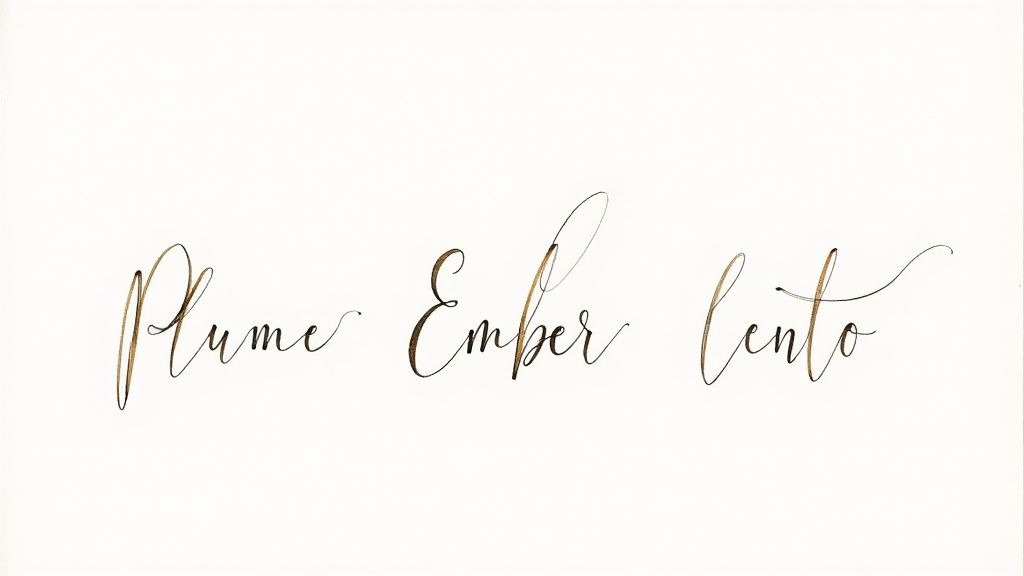
Consider these examples and their micro-analysis:
Plume: This word feels like air, drift, and softness. The sound itself—the "pl" onset followed by the long "ume" vowel—gives it a weightless quietness. It’s delicate and light, suggesting artistry.
Ember: The name instantly conveys warmth, a soft glow, and intimacy. The "mb" consonant cluster is almost tactile, creating a physical feeling of coziness. It’s a name that feels both nostalgic and present.
Lento: Borrowed from Italian musical notation for a slow tempo, this name is pure poetry. It frames the café experience as something deliberate and mindful, instructing customers to slow down before they even arrive.
Mellow: This is softness embodied in sound. The combination of "m," "l," and the rounded "ow" vowel creates a word that feels smooth, calm, and comforting to say and hear.
Insight: Poetic names turn the café into a ritual rather than a shop. They build a brand story that values aesthetics, mindfulness, and the sensory experience over pure function. These names are incredibly powerful for brands targeting a design-forward, artisanal audience.
Archetype #2. Spatial Café Names
While Poetic names are dreamy and abstract, Spatial names are grounded and intimate. This archetype uses the language of place, shelter, and enclosure to build an almost architectural feeling for your café. It’s less about a fleeting mood and more about creating a deep sense of physical and emotional safety—a place to settle in. These names tap into our fundamental need for shelter and belonging, making them powerfully effective for neighborhood hubs and community-focused spaces.
Here are a few examples that master this feeling:
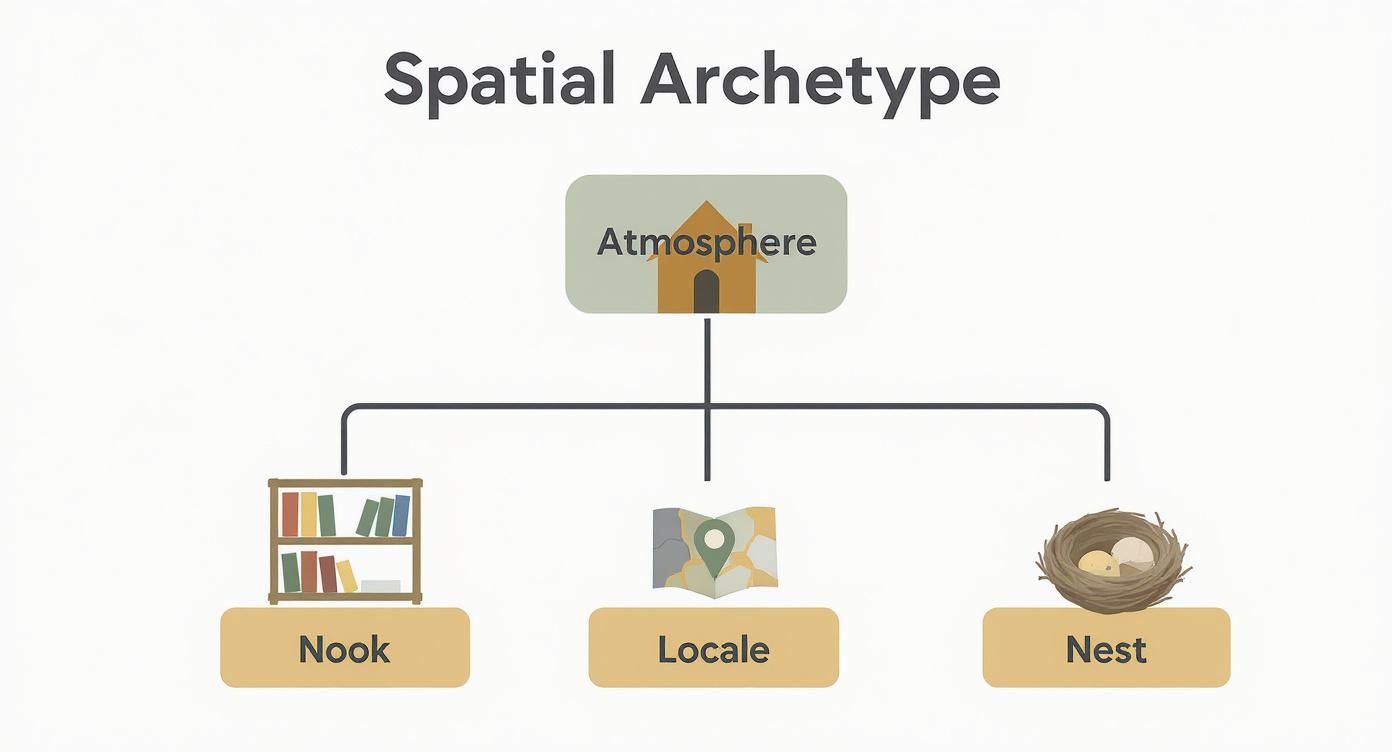
Nook: The definition of intimate. The short vowel and the crisp double consonant create a feeling of being snugly enclosed and protected. It immediately brings to mind a cozy corner perfect for reading or quiet conversation.
Locale: More sophisticated, Locale suggests a sense of belonging and being rooted in a specific community. It has a soft, almost European tone that implies a curated place, making customers feel like they're part of something truly local.
Corner: Simple, direct, and communal. Corner evokes the friendly, familiar feeling of a neighborhood gathering spot where paths cross and people connect. It is unpretentious and feels deeply connected to its surroundings.
Nest: This name is pure warmth and protection. Like Nook, it suggests safety and comfort but with a more organic, nurturing vibe. The crisp "st" ending gives it a firm, satisfying landing, making the name feel both gentle and solid.
Insight: Spatial names create emotional architecture: they build a place before the place exists. They define a welcoming space before a single customer walks through the door, laying the foundation for a true community hub.
Archetype #3. Botanical Café Names
Botanical names feel organic, calm, and deeply tactile. They work by borrowing from the plant-life lexicon to create a sense of growth, natural calm, and rootedness. This approach is a perfect fit for cafés that emphasize natural ingredients, earth-inspired interiors, or a slow-living aesthetic. These names forge an instant connection to something real and grounding, carrying the sensorial memory of nature even in a city café.
Let's look at the archetype in action:
Moss: Instantly tactile and soft. The word Moss feels plush and fresh; its single syllable and drawn-out "ss" sound create a sense of quiet, natural texture.
Fern: This name is delicate yet crisp. It brings to mind intricate, natural beauty and has a gentle but distinct sound that feels both fresh and timeless.
Birch: Evoking a clean, Scandinavian minimalism, Birch suggests pale wood and a sense of uncluttered, natural design. It’s a name that feels clean and modern.
Grove: Combining the ideas of community and nature, Grove feels like a protective canopy. Its rounded vowel sound adds a layer of warmth and suggests a shared, sheltered space.
Insight: Botanical names carry the sensorial memory of nature even in a city café. They are ideal for brands that want to signal a connection to natural ingredients, sustainability, and calm.
Archetype #4. Atmospheric Café Names
While Botanical names connect to the tangible earth, Atmospheric names capture something far more fleeting. They are mood-driven and sensory, often referencing light, air, color, time, or other transient phenomena. Cafés with these names feel like experiences, not locations. The vibe is often cinematic, gentle, and tied to a specific sensory state.
Hush: This name is quietness made audible. The final "sh" sound phonetically mirrors the act of silencing, creating a feeling of intimate calm and a soft exhale.
Dawn: Signifying early light and new beginnings, Dawn feels bright yet peaceful. Its clean, monosyllabic sound offers clarity and optimism.
Glow: Pure warmth and illumination. The soft "ow" ending creates a feeling of gentle, radiating light, promising a cozy and inviting space.
Vela: The Spanish and Italian word for "candle," Vela is fluid and minimal. It suggests a soft, flickering light with a hint of Mediterranean warmth and elegance.
Insight: Atmospheric names don’t describe the café. They describe the moment you step inside. They are perfect for brands that want to be perceived as an experience or a gentle escape from the everyday.
How Generators Can Use Archetypes Instead of Keywords
A name generator for cafe concepts that works from archetypes rather than simple keywords is fundamentally superior. Why? It produces coherent emotional worlds, not just word combinations. This approach avoids the generic "CoffeeHub / BeanHouse / BrewLab" trap, creating names that actively support your branding, interior design, and menu storytelling. The result is a timeless, rather than trendy, outcome.
A generator that works from archetypes can create not just names—but entire identities. This strategic approach ensures the name is not just an afterthought but the cornerstone of the brand experience. The growing market, with coffee industry revenue forecasts from Grand View Research showing incredible expansion, underscores why such nuanced branding is critical for standing out.
Validate the Name From Semantic Feel to Practical Reality
An evocative name is a powerful start, but it's only half the journey. Even the most atmospheric name must be validated against the practical realities of the market. This is where many founders stumble; they fall in love with a name's feel without checking its viability. This screening process isn't about killing creativity; it's about protecting it.
Your checklist must cover these bases:
Phonetic Clarity: Is the name easy to say, spell, and understand? Ambiguity kills word-of-mouth.
Emotional Coherence: Does the name's feeling align with your café's concept, interior design, and target audience?
Competitor Proximity: Is it too similar to other local or well-known cafés? Sounding like someone else is the fastest way to become invisible.
Trademark Prescreen: Does a preliminary search on the USPTO's TESS database reveal obvious conflicts? This can save you a world of legal trouble.
Domain & Social Availability: Are the matching .com domain and key social media handles available? A clean digital footprint is non-negotiable.
Before choosing your café name, run your shortlist through Chat Nameworm. It analyzes phonetics, semantics, linguistic archetypes, emotional tone, competitor proximity, and early trademark issues so your café’s identity feels both poetic and protected.
Insight: A beautiful name is good. A defensible beautiful name is unforgettable. You can find more details on this in our posts about using a generator to name a business and understanding why you need to trademark your business name.