The Linguistics of Taste: Why Certain Restaurant Names Feel Delicious
Learn how a name generator restaurant can spark memorable branding for your eatery. Tips, ideas, and real examples to choose a standout name.
Some names feel warm on the tongue before the food ever touches it. A word like Lilia lilts and melts, while a name like Ember smolders with the promise of char and depth. This is not an accident. Naming a restaurant is not product naming—it is sensory world-building. We react to the sound, rhythm, and texture of words in much the same way we react to flavors, and this subconscious connection is where a powerful brand identity begins.
The thesis is simple but profound: taste begins in language. The most evocative and memorable restaurant names are not just labels; they are carefully tuned instruments. They activate the palate through phonetics, creating an expectation and an atmosphere long before a guest steps through the door. They prime the senses for the experience to come, making the brand memorable on a visceral level.
A restaurant name isn’t read. It’s tasted.
The Phonetics of Flavor How Sounds Trigger Sensory Warmth
Certain sounds physically resonate with specific culinary sensations. This isn't poetic license; it's phonetic reality. The way a word moves in the mouth—the interaction of tongue, teeth, and breath—mirrors the experience of eating. Soft consonants, like L, M, N, and R, create a sense of warmth, creaminess, and fluidity. Consider Lilia, with its lilting, lyrical quality that feels like melted butter on warm pasta. Lupa is rounded and earthy, evoking rustic Roman energy, while Lure is smooth and fluid, like an oyster sliding from its shell. Marea, with its long vowels, suggests the soft, rolling rhythm of maritime waves.
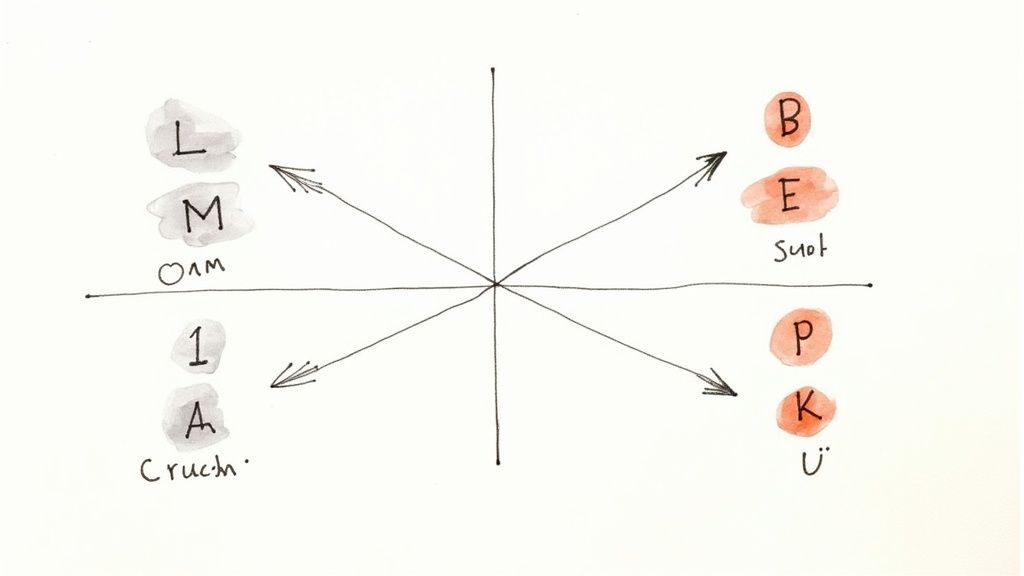
In contrast, plosive consonants—the hard stops of B, P, and K—signal bite, crunch, and structure. The name Bao, with its soft ‘B’ and open ‘AO’ vowel, feels both pillowy and bold. Babka uses a double plosive to give the name a satisfying richness and heft. The crispness in Kadeau suggests Scandinavian precision and composition, while Benne feels textured and earthy, like the sesame seeds it’s named for. Open vowels like A, O, and U create a feeling of warmth, fullness, and umami. Noma (Nordic + “mad,” or food) has a soft, open mouthfeel. The wide vowels in Osteria communicate hospitality and breadth, while Udon is round, comforting, and deeply satisfying. Short, open syllables—Bao, Lao, Nari, Oro, Koko, Momo—feel casual, immediate, and comforting.
We don’t just hear flavors—we feel them.
Sensorial Nouns—Why Material Words Taste Better Than Food Words
Some of the most powerful restaurant names have nothing directly to do with food. Names like Hearth, Ember, Ash, Salt, Clay, and Plume succeed because they activate a deeper sensory register. They evoke texture, heat, tactility, and aroma, not literal dishes. This approach sidesteps the mundane and builds a world around the culinary experience. These material words connect to our most primal ideas about cooking, craft, and community.Each name is a micro-story. Hearth signals warmth, origin, and the fire at the center of a home. Ember suggests smoldering flavors, deep char, and slow-burning intensity. Salt feels essential, elemental, and pure. Clay evokes earthiness, terroir, and the hand-crafted. Amber radiates a slow warmth, suggesting caramelization and honeyed tones. Plume speaks to delicacy, lightness, and the aroma drifting upward from a perfect dish. Compare these to the sterile effect of literal names like “Food House” or “Pasta Place,” which convey information but inspire no feeling. By focusing on the elements that create food, these names tell a far richer and more imaginative story.
Taste lives in textures, not in nouns.
Rhythm & Cadence. Why Some Names Melt and Others Crunch
The rhythm of a name—its syllable count and cadence—is an invisible grammar that shapes a guest's perception. Monosyllabic names like Lure, Salt, Grain, Nook, Ember, and Ash project an elemental confidence. They are sharp, clean, and immediate, signaling a concept that is direct and focused. There is a certain power in finding that single, perfect word that contains a whole world. This is a common strategy among modern brands, including those seeking impactful one-word business names.
Move up to two syllables, and the feeling often becomes warmer and more hospitable. Names like Noma, Marea, Roscioli, and Felix have a soft rise-and-fall pattern that feels more welcoming. This bisyllabic rhythm can mimic the pleasing cadence of chewing or sipping, creating an atmosphere that is instantly inviting and comfortable. They flow easily, suggesting a balance between approachability and craft.
Longer, more lyrical names of three or four syllables—Saison, Eleven Madison, Osteria Francescana, Vespertine—imply a sense of occasion, sophistication, and ritual. Their extended shape primes guests for a fine-dining experience, one with complexity, narrative, and ceremony. By consciously choosing a rhythm, you are subtly cueing the diner on exactly what kind of experience to expect before they even read a review.
Rhythm is the grammar of appetite.
Morphology. The Shape of Delicious Words
Beyond sound and rhythm, the internal structure of a word—its morphology—shapes how we perceive it. Fusion morphology blends concepts to create something new and evocative. Saison combines the idea of seasonality with a soft, French elegance. Sora merges the Japanese word for sky with a feeling of lightness and delicacy. Momofuku is whimsical, rhythmic, and layered with cultural depth. Another approach is truncated elegance, where names are clipped to feel minimal and elevated, like Lup (from Lupa) or Maré.
Material-based morphology builds a name around the core elements of earth, fire, water, and wood, resulting in names like Timber, Clay, Stone, Copper, or Cinder. Aromatic morphology does the same for scent and delicacy, yielding names that feel fragrant and light: Sora, Plume, Fleur, Bloom. Then there are phonesthetic clusters, combinations of letters that consistently evoke a specific taste or texture. The "gl" in Glaze suggests something glossy and glistening. The "cr" in Crisp evokes a satisfying crunch or crackle. And "sm" in a name like Smokery immediately brings to mind smoldering wood and deep flavor.
Morphology is where taste turns into language.
Cultural Codes of Taste. Why Cities Produce Distinct Naming Languages
Just as cuisines have regional dialects, so do restaurant names. The naming conventions in major gastronomic cities reflect their unique culinary identities. Copenhagen, a hub of Nordic minimalism, favors an elemental vocabulary: Noma, Kadeau, Relae, Barr. The names are short, stark, and deeply connected to nature. Tokyo’s dining scene produces names that echo its values of precision, elegance, and purity: Sazenka, Lature, Den, Kanda. They are often lyrical and imbued with a sense of refined craft.
New York, by contrast, speaks a language of energy, personality, and modern Italian influence, with names like Lilia, Marea, Lure, Lupa, and Atomix. They are stylish, confident, and phonetically pleasing. Meanwhile, the names in Rome radiate warmth and heritage: Roscioli, Felice, Osteria da Fortunata. They feel classic, familial, and deeply rooted in tradition. These patterns are not accidental; a city’s culinary philosophy shapes its phonetic landscape.
Every food culture speaks its own phonetic dialect.
Why Generators Fail and How To Use Them Properly
This brings us to the common tool for naming: the restaurant name generator. The fundamental gap is that generators are built to produce keywords, but great restaurants are built to create worlds. A standard tool might offer “Gourmet Grill” or “Tasty Bites,” names that are descriptive but devoid of atmosphere, texture, or story. They operate on a purely semantic level, missing the crucial phonetic and sensory layers that make a name truly compelling.
However, this doesn't render them useless. When used strategically, a name generator can be a powerful tool for ideation. Instead of looking for a final answer, use it to expand your semantic fields. Use it to explore phonetic possibilities you hadn't considered. Use it to discover surprising word roots and combinations that can serve as raw material for a more thoughtful naming process. For more on this, check out our practical guide on using a startup business name generator the right way.
Generators create lists. Naming creates atmospheres.
Validate the Name. Taste Must Meet Strategy
A beautiful, evocative name is a powerful asset, but sensory appeal alone is not enough. A name can feel perfect on the tongue yet fail in the marketplace. To be truly effective, it must be phonetically clean, emotionally coherent, semantically safe, competitively distinct, and, crucially, legally viable. The journey from a creative idea to a defensible brand asset requires rigorous validation.
This final step transforms an artistic choice into a strategic one. In an increasingly crowded market, where the right name can be a significant competitive advantage, this diligence is not optional. Recent discover more about restaurant industry statistics show that brand distinction is more critical than ever for attracting and retaining customers. Before you commit to a name and invest in a brand, you must ensure it can be owned and defended.
Before choosing your restaurant name, run it through Chat Nameworm—it analyzes phonetics, sensory tone, semantic fields, competitor similarity, and early trademark conflicts. It turns taste into strategy.
A beautiful name matters. A defensible name lasts.