The Psychology of Naming a Shop in the Age of Scrolling
Stop scrolling, start naming. Discover the best shop name generator tools for founders who need strategic, memorable, and legally sound options.
A great shop name once lived above a door. Today, it lives inside a feed. The first encounter with your brand now happens in the endless scroll of Instagram, the crowded grid of Google Maps, or a search results page on Etsy or Shopify. The transformation is absolute: the "storefront" is now an interface, not a street corner.
This shift presents a new strategic challenge. A good shop name no longer just invites you inside—it has to stop your thumb. This guide is for founders who understand that naming is strategy, not just creativity. We will move beyond basic tips and dive into the psychology of what makes a name stand out when every digital interface looks the same. The goal is to find a name that is not just clever, but cognitively potent and legally protectable.
This resource breaks down the best shop name generator tools available, but more importantly, it provides the framework to use them effectively. We’ll analyze what makes a name work in a world of fleeting attention, helping you decide between a DIY approach, hiring an agency, or exploring a hybrid solution like Nameworm. You will learn how to find a name that carries the emotional weight of a physical space, creating a sense of place inside your customer's mind before they even click.
Key Takeaways
From Streets to Screens: A shop name’s primary job has shifted from physical wayfinding to digital attention-grabbing. It must function in visually crowded, standardized interfaces.
Words as Interiors: In a flat digital world without scent, texture, or atmosphere, the name becomes the emotional entry point, conveying the mood the storefront once did.
Designing for Memory: The best digital-first names are built for recall, not just description. They use phonetic fluency and emotional cues to become memorable in milliseconds.
Emotion Precedes Information: A name signals mood, value, and belonging before a user clicks. It functions as micro-UX, shaping expectations instantly.
The Sweet Spot: The most effective names are emotionally distinct yet semantically intuitive, balancing clarity (can be found) with stickiness (can be remembered).
1. The Digital Shopfront: When Words are the New Interiors
Modern discovery is visually uniform but emotionally starved. Think of the interfaces where customers first meet your shop: identical cards on Etsy, same fonts in a Shopify theme, minimal color context on Instagram. There is no scent, no texture, no architectural detail to communicate your brand's essence.
In this environment, the name becomes the primary emotional entry point. It has to do the heavy lifting that a well-designed physical storefront once handled. Where architecture once spoke for the brand, now language must.
In a flat interface, words are the new interiors.
This means your name isn't just a label; it’s your first piece of design. It must convey mood, quality, and personality in an instant, creating a distinct feeling in a sea of sameness.
2. The Cognitive Side of Scrolling: Designing for the 200ms Glance
To understand how to stop the scroll, we need to look at attention and memory psychology. Users scroll at high speed, and recognition happens in approximately 200 milliseconds. In that sliver of time, the brain isn't reading—it's pattern-matching.
Short, emotionally charged words trigger faster recall due to cognitive principles like dual-coding theory (words that evoke images are easier to remember) and fluency bias (we prefer things that are easy for our brains to process). "Scroll-stopping" names leverage rhythm, phonetic texture, and emotional tone to break the monotonous pattern of the feed. They don't just describe; they feel like a pause.
Caselet: From Literal to Lyrical
Scenario: A founder is launching an online store for artisanal, small-batch candles. Their initial name idea is "Artisan Candle Collective."
Problem: The name is descriptive but generic. It blends into search results and is instantly forgettable. It describes the what, not the why.
The Pivot: After analyzing the target audience (design-conscious millennials seeking calm), they shift strategy. The goal isn't to describe candles, but to evoke the feeling of using them. They land on "Morrow".
Result: The new name is poetic, memorable, and emotionally resonant. It suggests calm, future, and aspiration. It stands out in a feed, sparking curiosity and building brand equity far more effectively than its literal predecessor.
Other examples of names that use emotional tone to break patterns:
Kindred: Instantly signals warmth and connection.
Glowbar: A fusion of visual and sensory language that feels active and bright.
3. Emotion as User Experience: Naming as Micro-UX
In the digital layer, naming now functions as micro-UX. It signals mood, value, and a sense of belonging before a user even clicks. Emotion precedes information.
In physical retail, context does this work. The music, lighting, layout, and scent of a store all combine to create an atmosphere. Online, the name must perform that function almost single-handedly. It's the first and most concentrated piece of your brand's user experience.
Your shop’s name is your first piece of design—not your last.
Choosing a name like "The Bargain Bin" versus "The Curated Shelf" sets entirely different expectations about quality, price, and experience. Neither is right or wrong, but one is a deliberate design choice that aligns with a specific brand strategy.
4. Designing for Memory, Not Just Meaning
The challenge is finding the balance between clarity and stickiness.
Overly literal names (
QualityLeatherBags.com) blend into algorithmic noise and feel generic. They are easy to search for but impossible to remember.Overly abstract names (
Xylos) fail to connect with any user intuition and are difficult to recall or search for. They require a massive marketing budget to build meaning.
The sweet spot is a name that is emotionally distinct yet semantically intuitive. It hints at the category without being chained to it. This is where phonetic fluency, or "mouthfeel," becomes critical. Research shows that the easier a word is to pronounce, the more trustworthy and credible it feels.
The easier a word is to pronounce, the faster it becomes familiar—and familiarity feels like credibility.
A name that is pleasing to say is more likely to be shared and remembered, turning a fleeting glance into a lasting impression.
5. The New Customer Journey: From Scroll to Imagination
The modern behavioral path for discovering a new shop has fundamentally changed. It’s no longer about walking down a street; it's a cognitive journey that happens in seconds.
Scroll → Notice → Click → Imagine → Decide → Visit.
The name's most critical role is in the "imagine" stage. It shapes what a customer expects to feel and find before they’ve seen a single product. This is where shop naming diverges from startup naming. Startups often sell complex ideas over time; shops sell moments of desire. Therefore, a shop's name must deliver an instant emotional truth.
6. Framework: How to Choose a Shop Name Generator
For founders comparing a DIY/AI tool against hiring an agency or freelancer, the right choice depends on your trade-offs between speed, budget, and strategic depth. Here’s a decision framework.
| Approach | Best For | Key Risk | Cost |
|---|---|---|---|
| DIY / AI Tool | Rapid brainstorming, budget constraints, initial idea validation. | High risk of generic or legally unavailable names. Requires significant user vetting. | Free - $100 |
| Proven Freelancer | Founders needing strategic guidance and a creative partner without agency overhead. | Quality varies. Requires careful vetting of the freelancer's portfolio and process. | $500 - $5,000+ |
| Naming Agency | Well-funded businesses needing a legally defensible, market-tested name with full strategic support. | High cost and longer timelines. Can be overkill for early-stage shops. | $5,000 - $100,000+ |
AI-powered shop name generator tools are excellent for the initial divergence phase—casting a wide net for ideas. Below are the best tools, reviewed through the lens of a naming strategist.
7. The 12 Best Shop Name Generator Tools (2025 Review)
1. Nameworm
Nameworm distinguishes itself by moving beyond random word combinations to offer a strategic, agency-style naming service powered by AI. Instead of just a list, this shop name generator delivers a presentation-ready package with a handful of meticulously vetted names. This approach is ideal for founders and marketing teams who understand that a name is a strategic asset, not just a label. The process is straightforward: you submit a brief, and Nameworm’s multi-agent AI system, which combines models like GPT, Claude, and Gemini, gets to work.
What makes it a standout choice is the "human-in-the-loop" workflow. Every output is reviewed, ensuring the suggestions are not only creative but also strategically sound. Each name comes with a clear rationale explaining its fit, suggested taglines, a competitor analysis, and crucial pre-screening for domain availability and USPTO trademark conflicts. This built-in vetting process saves significant time and reduces the risk of choosing a name that is legally unavailable or difficult to secure online.
Pros: Combines AI with human oversight, includes vital domain and trademark checks, provides strategic rationales, offers clear one-time pricing.
Cons: Trademark checks are preliminary and US-focused (USPTO), not a substitute for formal legal advice. Only one revision round is included.
Website: https://www.nameworm.ai
2. Shopify – AI Business Name Generator
For entrepreneurs who value speed and ecosystem integration, the Shopify shop name generator is an unparalleled starting point. It's designed not just to give you a name, but to propel you directly into building your online store. The tool’s core function is its seamless workflow: enter a keyword, and it instantly produces a list of potential names while simultaneously checking for .com domain availability.

The integration is Shopify’s primary advantage; it’s the fastest path from a naming spark to a live, functional storefront. However, this speed can come at the cost of distinctiveness and legal defensibility. The names it generates are not exclusive, and a separate trademark search is still a critical, non-negotiable step. For a deeper dive into the tool's capabilities, you can explore more about the Shopify AI Business Name Generator.
- Best for: Founders committed to the Shopify platform who need a functional, brandable name quickly and prioritize domain availability above all else.
3. Namelix (by Brandmark)
For founders seeking a creative spark rather than a literal description, Namelix is an indispensable shop name generator. It uses an AI model to produce short, catchy, and brandable names that are more inventive than what many simpler tools can offer. Each suggestion is paired with AI-generated logo concepts, helping you visualize the brand identity from the very beginning.

The tool’s strength in creating unique, invented words is also a potential weakness. These names often lack inherent meaning, requiring a larger marketing effort to build brand recognition. A separate, thorough trademark search is essential. You can find more information about how this tool fits into the business naming process in this overview of a name generator for business.
- Best for: Entrepreneurs and startups looking for a short, modern, and highly brandable name who are prepared to invest in building its meaning from scratch.
4. NameSnack
For entrepreneurs who need a high volume of ideas without friction, NameSnack is a powerful brainstorming partner. It operates on a simple, effective premise: combine machine learning with keyword inputs to generate a broad range of names and instantly check domain availability. This makes it an excellent tool for the initial, exploratory phase of the naming process where quantity often leads to quality.
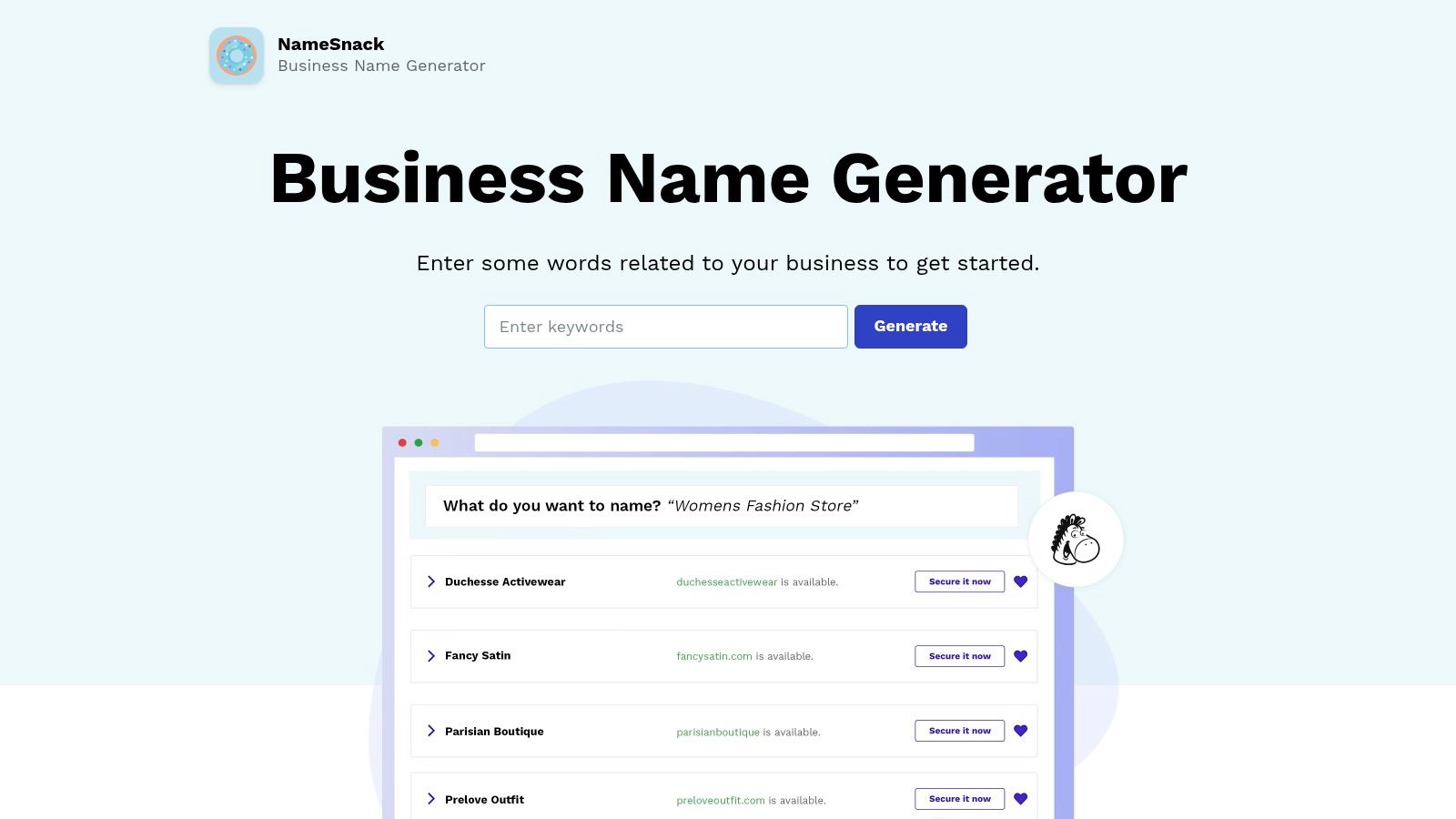
The primary limitation of NameSnack is its lack of built-in legal screening. The tool is excellent for creative exploration, but the names it produces are not checked for trademarks. This means a crucial, separate due diligence step is required.
- Best for: Founders and creatives in the early stages of brainstorming who want a high volume of diverse name ideas without any cost or usage limits.
5. BusinessNameGenerator.com (BNG)
For founders seeking a versatile and highly customizable shop name generator, BusinessNameGenerator.com (BNG) offers a robust, filter-driven experience. It moves beyond simple keyword entry, allowing you to layer in specific creative constraints like industry, tone, length, and even language.
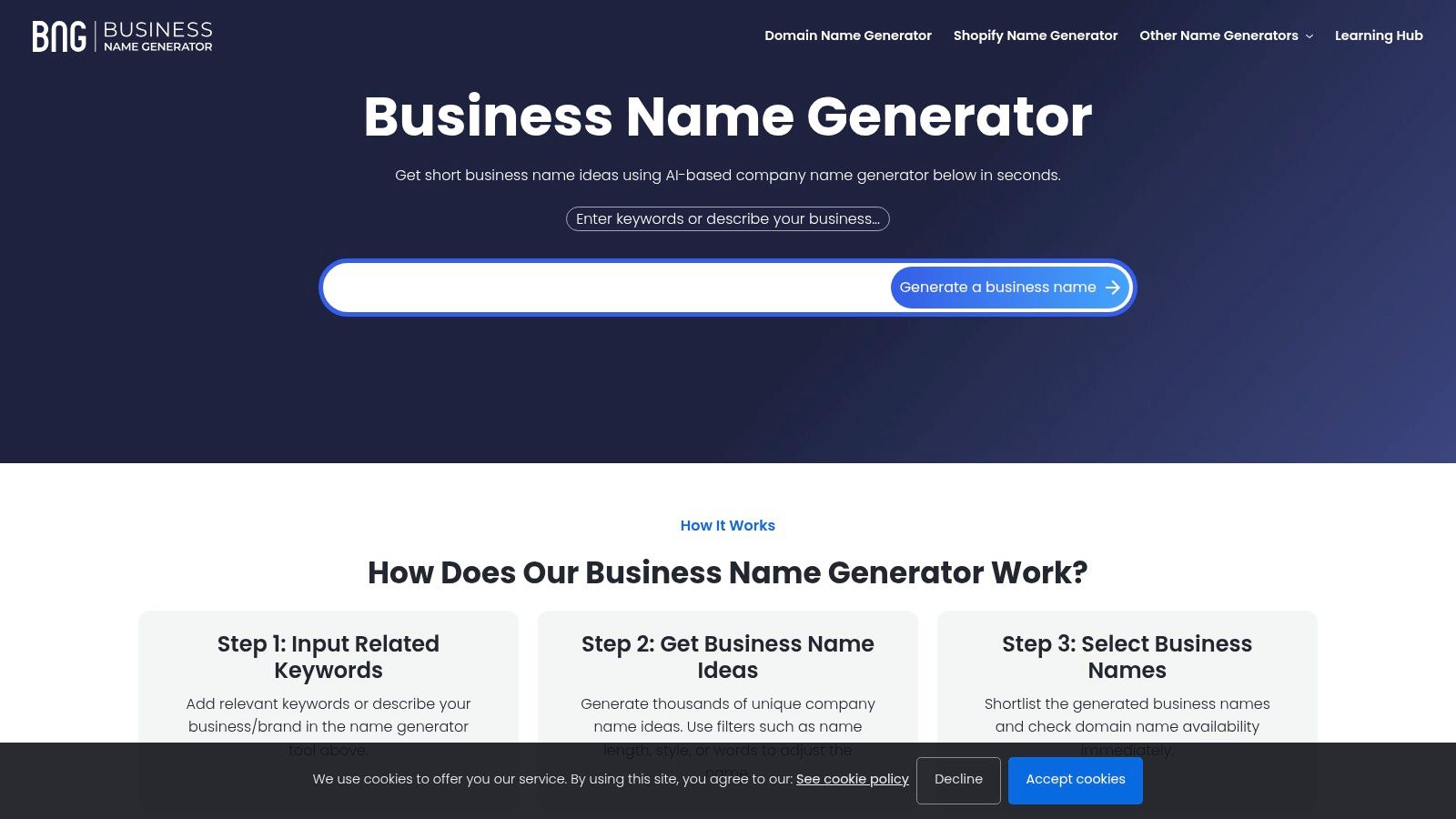
The tool's extensive options and free access come with a trade-off: the user experience is interspersed with advertisements and affiliate links. The quality of suggestions can vary, and like other AI tools, it does not perform trademark checks.
- Best for: Entrepreneurs who want to explore a wide range of name styles with specific filters and need multi-language or niche-specific suggestions.
6. Namify (by Radix)
For founders who see their brand living beyond the traditional .com bubble, Namify offers a modern and pragmatic approach. This AI shop name generator is built to find names that are not just creative but available across today's digital landscape, with a strong focus on newer top-level domains (TLDs) like .store, .online, and .tech.

The platform's emphasis on new TLDs is both its strength and a potential limitation. While a .store domain is perfect for e-commerce, businesses aiming for a traditional corporate feel might find the limited .com suggestions restrictive.
- Best for: E-commerce startups and modern brands open to using new TLDs like
.storeor.onlinewho value an all-in-one check for domain and social handle availability.
7. GoDaddy – Free AI Business Name Generator
For entrepreneurs who view their shop name as the first step in a larger digital ecosystem, GoDaddy's tool is a powerful contender. Positioned within one of the world's largest domain registrars, this shop name generator excels at connecting a name directly to the assets needed to build a brand.
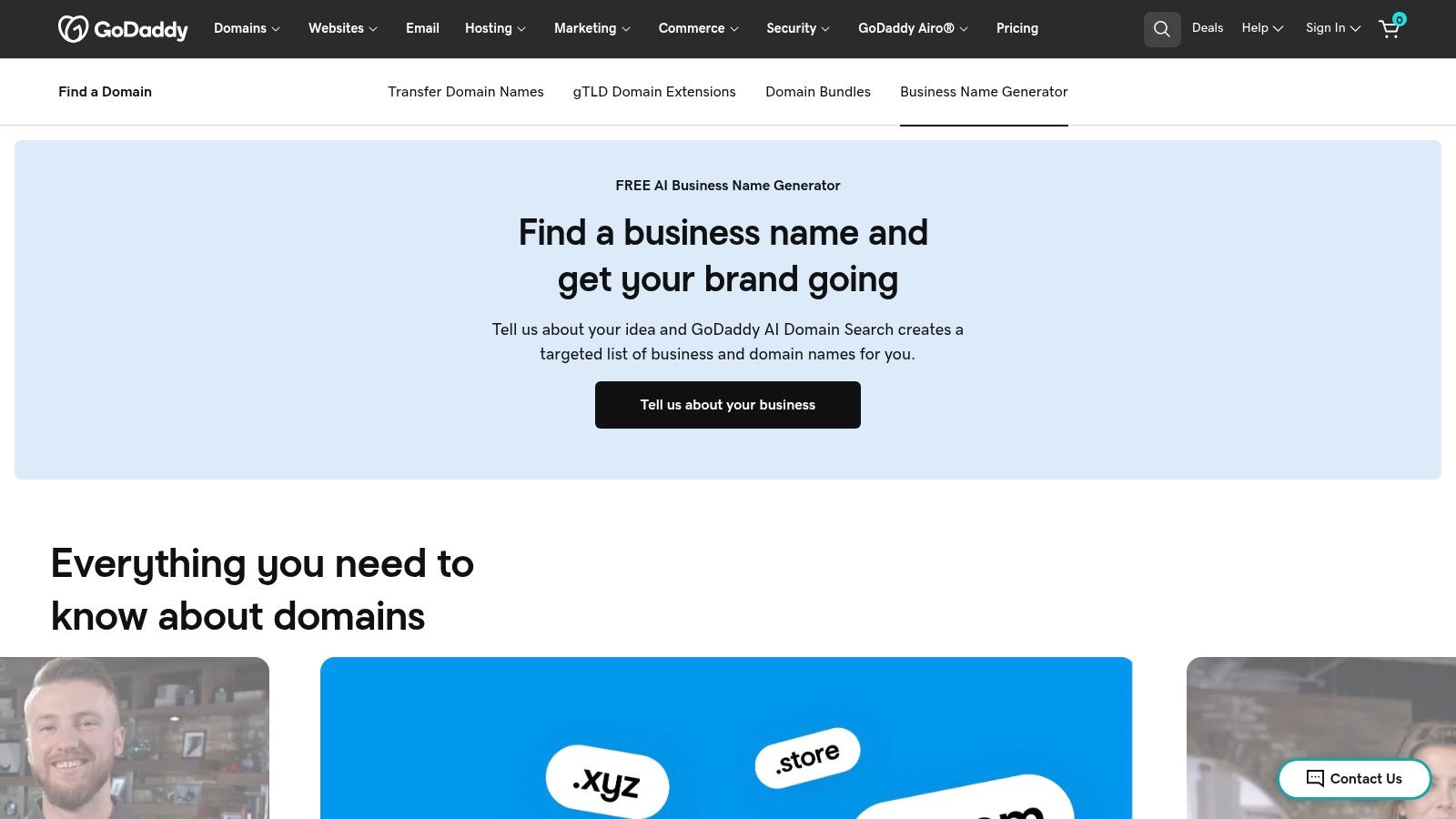
Critically, the generator focuses on domain availability, not trademark viability. A name being available as a .com does not mean it is legally clear to use. Founders must conduct their own due diligence.
- Best for: Entrepreneurs who prioritize securing a domain and basic brand assets (logo, email) in a single, streamlined workflow and value the support of a large, established registrar.
8. Wix – Business Name Generator
For entrepreneurs seeking an all-in-one solution, the Wix Business Name Generator serves as an integrated first step into its vast website-building ecosystem. The tool is designed for non-technical users who want a seamless path from finding a shop name to launching a full-featured online store.
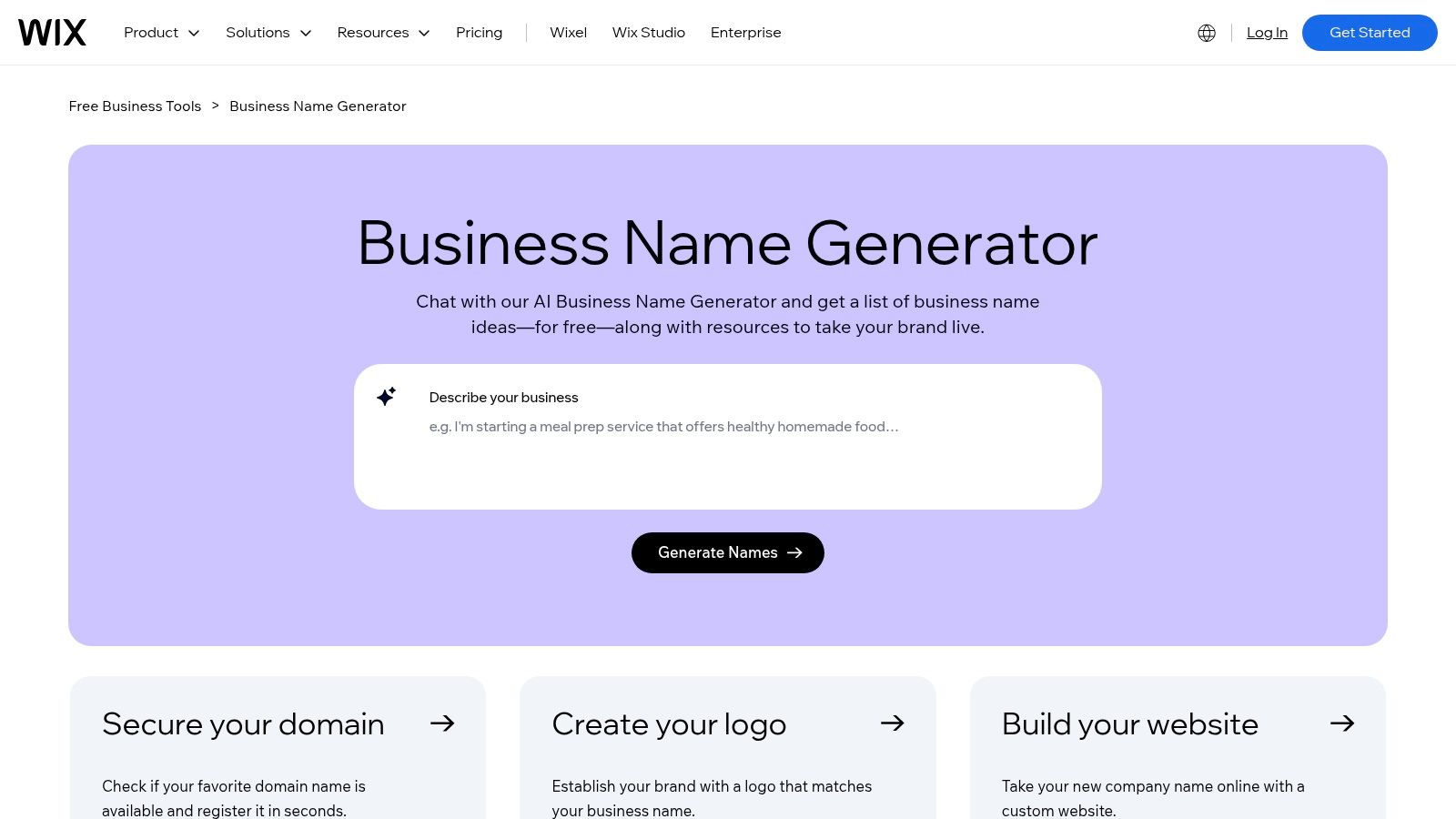
The tool is designed to keep you within the Wix ecosystem, so its suggestions are heavily optimized for immediate domain registration and site creation on their platform. For more details, you can learn more about the Wix Business Name Generator.
- Best for: Solopreneurs and non-technical founders committed to using the Wix platform who want a simple, integrated process for naming their shop and building their website.
9. Hostinger – AI Business Name Generator
For founders and small businesses who prioritize a direct, cost-effective path from naming to online presence, the Hostinger shop name generator is an excellent choice. Its primary function is to quickly generate name ideas based on your keywords and immediately funnel you into securing a domain and a low-cost hosting plan.

The generator offers no built-in trademark or social media handle checks, placing the burden of legal due diligence entirely on the user. A separate, thorough trademark search remains an essential step.
- Best for: Budget-conscious entrepreneurs and startups who plan to use Hostinger for web hosting and want a simple, one-stop solution for naming their business and securing a domain.
10. Atom (formerly Squadhelp) – Naming Contests & Marketplace
For founders who believe a name is an investment, not an afterthought, Atom offers a human-powered alternative to AI generators. You can either launch a naming contest to receive hundreds of custom ideas from a global community of creatives or purchase a pre-vetted, premium name from their extensive marketplace. This approach is built for those prioritizing distinctiveness and market validation.
The primary tradeoff with Atom is cost and time. Unlike instant generators, this process requires a financial investment and can take several days to a week to complete. Even with the included screenings, you must conduct your own formal legal trademark search.
- Best for: Entrepreneurs and marketers who are willing to invest in a highly distinctive, human-generated name and value services like logo design and preliminary trademark checks.
11. BrandBucket – Buyable Brandable Names (+ Generator)
For founders who view a brand name as a premium, non-negotiable asset, BrandBucket offers a distinct approach. It’s less of a generator and more of a curated marketplace for pre-vetted, brandable .com names, each sold with a professionally designed logo. This model eliminates the risk of falling for a name that isn’t actually available.
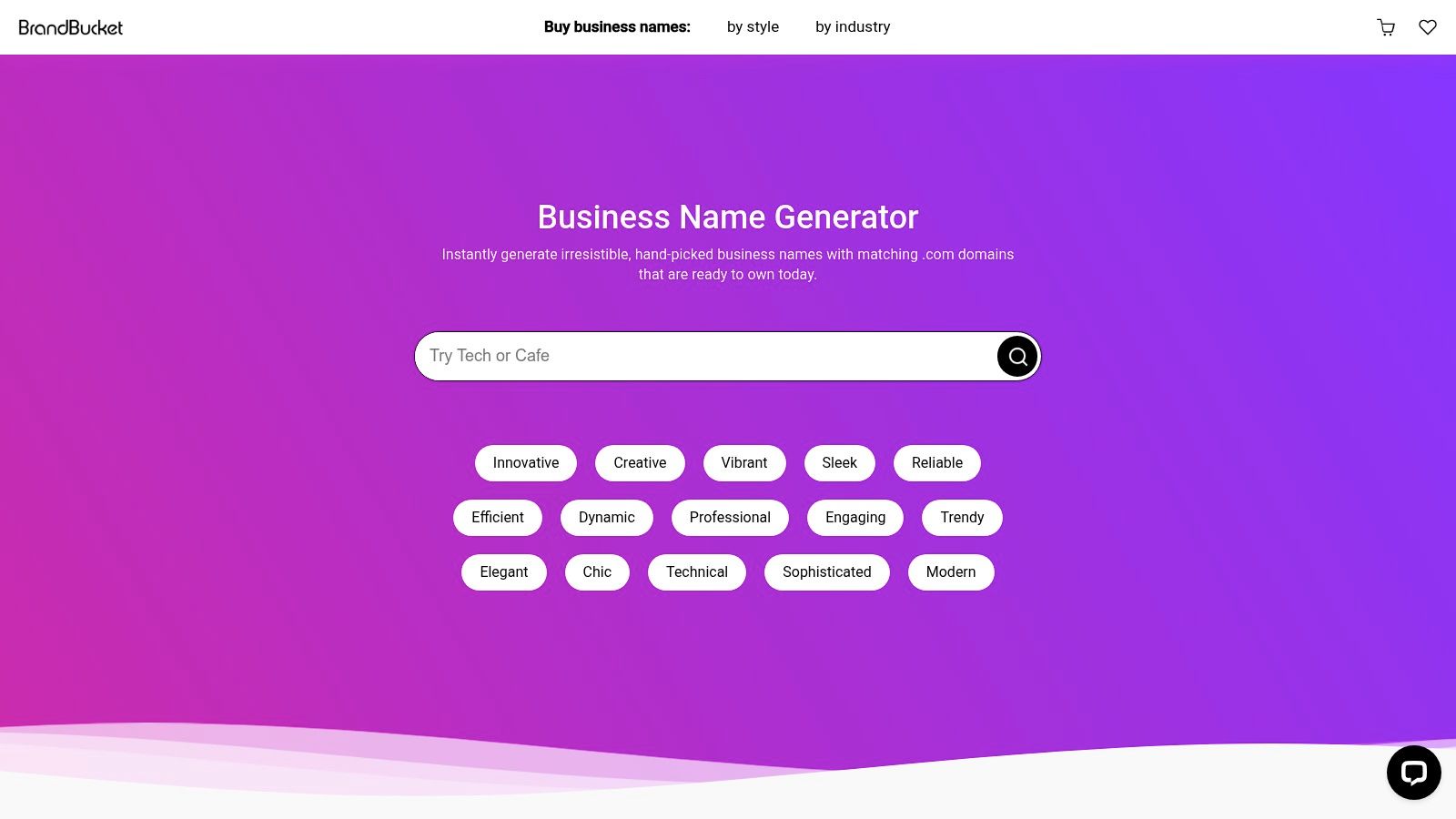
The primary barrier is cost. BrandBucket is a significant investment. While the names are pre-vetted for brand quality, they are not pre-screened for trademark conflicts. A separate legal check is still an essential step, and you can learn more about why you need to trademark your business name to protect your investment.
- Best for: Founders with a sufficient budget who need a premium, memorable
.comdomain and logo immediately and value certainty over creative exploration.
12. Brandroot – AI Business Name Generator + Marketplace
Brandroot combines a smart AI shop name generator with a curated marketplace, creating a dual-purpose platform for entrepreneurs who value both immediate inspiration and a ready-to-use brand asset. It’s built for founders who understand that a strong name needs a matching .com domain from day one.
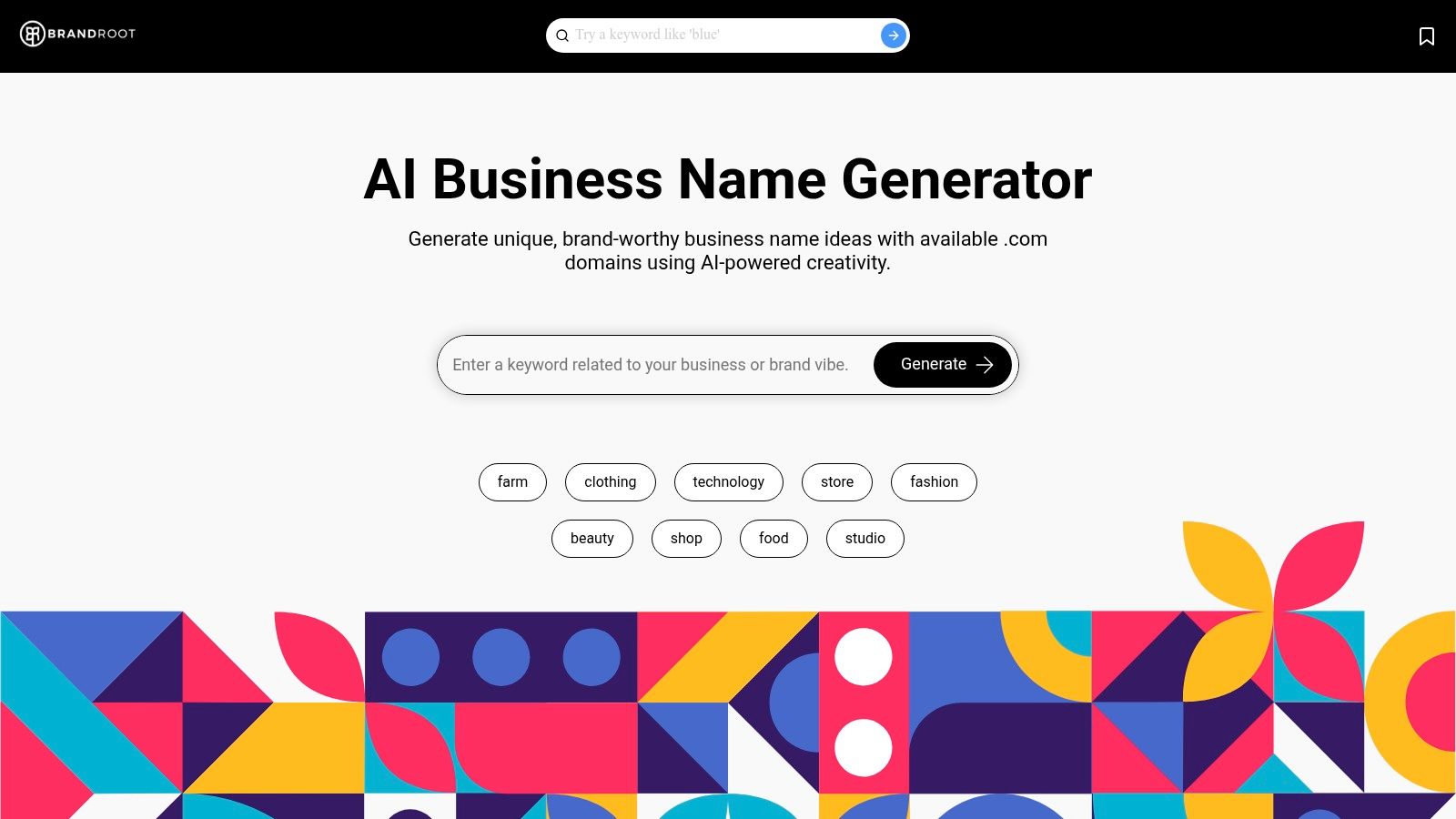
The legal defensibility of the names is the user's responsibility. A separate, thorough trademark search is essential before committing to any name, whether from the AI generator or the marketplace.
- Best for: Entrepreneurs and startups who prioritize securing a premium
.comdomain and want either AI-driven inspiration or a ready-made brand package to accelerate their launch.
8. The Future of Digital Place-Making
The tools we use to name our businesses are evolving. We can expect future shop name generators to incorporate emotional and cultural modeling, providing contextual suggestions that resonate with specific demographics or local tones. AI will get better at understanding not just semantics, but sentiment.
But technology is only an amplifier. The core principle remains human. In a post-physical retail era, naming is about creating a sense of belonging. It’s about building a space for your customers in their own minds.
The next generation of shop names won’t just identify a place—they’ll create one inside your mind.
Pitfalls & Gotchas on the Final Stretch
Even with a great list from a generator, critical errors can happen in the final stages. Avoid these common traps:
The "Perfect .com" Fallacy: A great name is more important than the exact-match .com. Wrong. Dead wrong. In a crowded market, availability is a key feature. But don't discard a brilliant name if the .com is taken. Creative modifiers (
ShopMorrow.com) or alternative TLDs (.shop,.store) can be just as effective.Ignoring Linguistic Screening: A name that sounds perfect in English might have unfortunate meanings in other languages. A quick check on Google Translate or with native speakers can prevent a major international blunder.
Skipping the Trademark Pre-Screen: Falling in love with a name before checking for trademark conflicts is a recipe for legal disaster. Use the USPTO's TESS database or a similar registry for a preliminary search before you get attached. This is not legal advice; always consult a qualified attorney.
Next Steps Checklist
Define Your Naming Brief. Before you touch a generator, document your strategy: Who is your audience? What emotions do you want to evoke? What is your brand's personality (e.g., playful, minimalist, luxurious)?
Generate and Diverge. Use 2-3 of the tools listed above to create a long list of 50-100 potential names. Focus on quantity and variety at this stage.
Screen and Converge. Filter your long list down to a Top 5 using your brief. For each, conduct a basic domain and social media handle check.
Perform a Trademark Pre-Screen. Run your Top 5 through a basic search on your country's trademark office database (e.g., USPTO TESS in the US). Eliminate any with direct conflicts.
Test for Resonance. Ask a small group of your target customers what feelings or ideas each of your final names brings to mind. Their perception is your brand's reality.
The tools listed are excellent for brainstorming, but when you need a protectable, memorable name without the agency price tag, a more focused path is required. Nameworm combines AI-driven creativity with rigorous screening to deliver names that are ready to build a brand on.